Journal / Field note
What Is Vibe Coding?
Vibe coding is building software by describing what you want to an AI in plain language, running what it writes, and iterating, often without reading every line. The term comes from Andrej Karpathy, who used it in a February 2025 post on X. Done carefully, it is a fast way to prototype. Done carelessly, it ships bugs nobody can explain.
What does vibe coding mean?
In its original sense, vibe coding is a loose, conversational way of making software. You say what you want. The AI writes the code. You run it. If it breaks, you paste the error back and ask for a fix.
The part that made the term stick is the attitude. You steer by feel and results, not by reading the code closely.
Why is it called vibe coding?
Karpathy described the style in a February 2025 post on X, where he called it a new kind of coding. As he described it, you go with the flow, accept the AI's changes, and mostly judge the result by whether it works. The word "vibe" is the point: you are not engineering every detail, you are following the feel of the thing.
Since then, many people have used the phrase more loosely, for any coding done with AI help. Karpathy's original description was the no-review kind. It helps to know which one someone means.
How do you vibe code with Claude or Cursor?
The tools differ. Claude can write code in chat or in a coding tool, and Cursor is an editor with AI built in. The habits that work are the same in both:
- Write a short spec. One paragraph on what you are building and who it is for.
- Ask for a plan first. Read it before any code appears. Cheap to fix now, annoying later.
- Build in small steps. One feature at a time beats "build the whole app."
- Run it often. Real output is better feedback than a code review you skim.
- Paste errors back verbatim. Include what you expected and what happened.
- Save your progress. Use version control so you can undo a bad turn.
- Ask the AI to explain. If you cannot say what a piece does, ask.
If your project grows, keep a short notes file with the goals and decisions. Models forget more than you would like, and a notes file is a cheap memory.
What is vibe coding good for, and where does it go wrong?
It is good for:
- Prototypes and demos
- Internal tools and one-off scripts
- Learning by building
- Getting past the blank page
It goes wrong when:
- Nobody understands the code. Debugging gets harder every day.
- Security gets skipped. Logins, payments, and personal data need real review.
- Small bugs pile up. Each fix can break something else.
- The project outgrows the chat. Big codebases need structure the model cannot hold in its head.
A fair rule: the more it matters if it breaks, the less you should vibe and the more you should read.
Is vibe coding the same as AI-assisted coding?
Not quite. AI-assisted coding is the wide category. A developer might use AI for autocomplete, tests, or refactors while reading and owning all the code. Vibe coding is the end of that range where you lean on the AI and read little.
Plenty of good work sits in the middle. Many people vibe a first draft, then read it properly before it ships.
FAQ
Do I need to know how to code to vibe code? You can start without it. You will get further, and fix problems faster, if you learn the basics along the way.
Is vibe coding safe for production software? It can be, if a person reviews, tests, and understands what ships. Skipping that step is where trouble starts.
Which tool is best for vibe coding? There is no single answer. Try a chat-based tool and an editor-based one, and keep whichever fits how you think.
Who invented the term? Andrej Karpathy used it in a post on X on February 2, 2025.
If you want the shirt
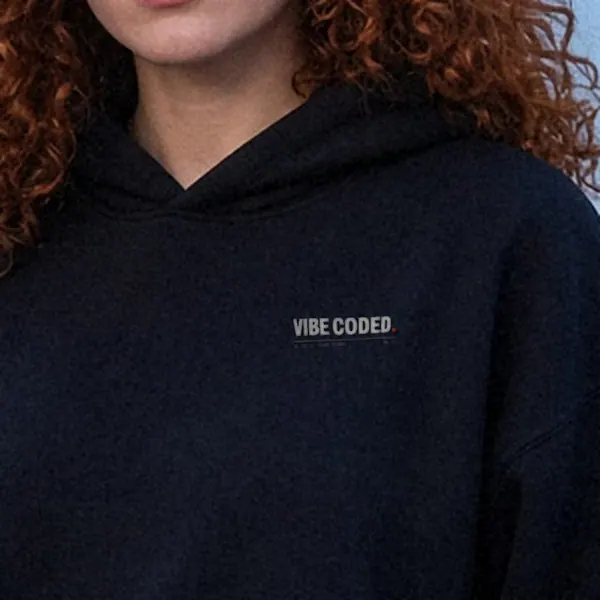
That was the explainer. If you also want the hoodie, the Vibe Coded. Shipped Anyway. Hoodie is printed on demand. Hoodies here run $59 to $64.
It is a joke for people who built something with an AI and then deployed it on faith. It is not a recommendation to do that.
Context Window Supply is independent and is not affiliated with Anthropic, Cursor, OpenAI, or anyone else.